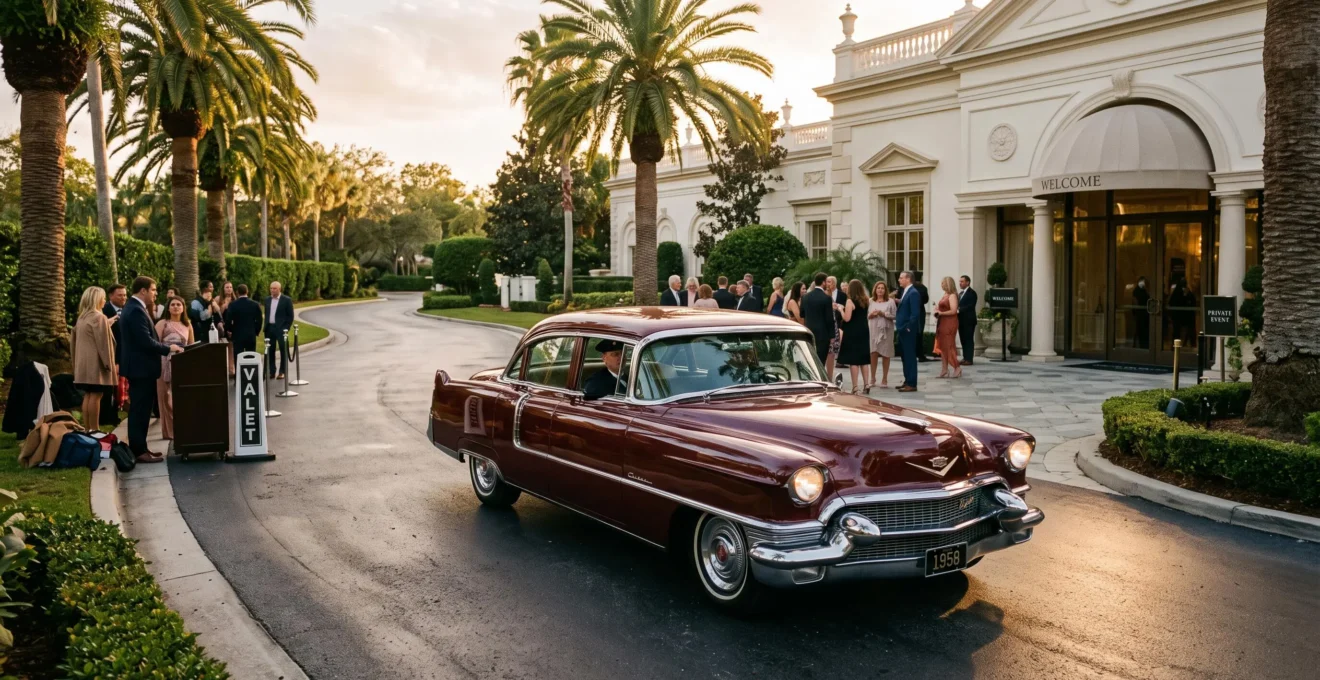
An elegant arrival begins before anyone steps out of the vehicle. The shape of a classic hood, the reflection of sunlight across polished chrome, and the contrast between historic bodywork and a formal venue can turn a brief entrance into a memorable part of an occasion.
For weddings, anniversaries, galas, and private celebrations, the most effective car styling choices are rarely the most elaborate. Distinctive proportions, a coherent color palette, carefully considered lighting, and restrained decoration usually create a more sophisticated impression than excessive accessories.
Vehicle design heritage also influences how an arrival feels. A long-wheelbase sedan communicates ceremony and discretion, while an open classic convertible creates a more visible, celebratory entrance. Neither works independently of the location, clothing, weather, or event schedule.
In Florida, these choices require additional attention to strong sunlight, humidity, and seasonal thunderstorms. The objective is to select a vehicle whose appearance supports the event while ensuring that its presentation remains practical, safe, and compatible with the rental agreement.
Essential Principles for an Elegant Classic Car Arrival
- Prioritize silhouette and proportion: long fenders, recognizable grilles, and period-specific details create visual distinction without elaborate decoration.
- Coordinate the entire visual setting: exterior paint, interior upholstery, formal attire, architectural surroundings, and natural light should complement one another.
- Protect the experience through planning: confirm photography permissions, weather alternatives, vehicle condition, decoration restrictions, and transportation logistics before the event.
- Why Do Vintage Car Silhouettes Stand Out in Wedding Photography?
- How to Match a Classic Car’s Color to a Formal Event Theme?
- Classic Convertible or Formal Sedan: Which Creates a Better Entrance?
- Which Decorative Accessories Can Damage a Classic Rental Car?
- When Is the Best Light for Photographing a Classic Car in Florida?
- How to Inspect a Vintage Rental Car Before a Wedding Drive?
- Which Luxury Rental Extras Are Worth Prioritizing for a One-Day Event?
- How to Build a Luxury Car Rental Package for a Special Florida Occasion?
Why Do Vintage Car Silhouettes Stand Out in Wedding Photography?
Vintage car silhouettes stand out in wedding photography because their long body lines, prominent grilles, sculpted fenders, and chrome accents create recognizable shapes from multiple viewing distances. These features help establish a strong visual composition, particularly when the vehicle is photographed against formal architecture or incorporated into a carefully framed arrival scene.
Historic automotive design often emphasizes proportions that differ noticeably from contemporary vehicles. Extended hoods, upright windshields, substantial wheel arches, and distinct rooflines provide clear visual reference points. On vehicles with well-maintained finishes, chrome trim introduces highlights that outline the bodywork.
These details can be especially compelling in black-and-white wedding photography. Contrasting finishes and recognizable contours help separate the vehicle from its surroundings, although the result depends on lighting, exposure, and the photographer’s treatment of reflections. Modern vehicles can photograph equally well; the advantage of a vintage car lies in its distinctive design language rather than an inherent photographic superiority.
Two complementary compositions deserve attention:
- The hero shot: a controlled portrait emphasizing the car’s proportions, architectural context, and the couple’s formal clothing.
- The arrival shot: a documentary image capturing the vehicle approaching, guests reacting, or passengers preparing to step out.
For a vehicle with extended rear fenders, a three-quarter rear perspective can reveal the full sweep of its profile. A slightly lower camera position may emphasize an imposing front grille. Side views work well when the car has a particularly recognizable roofline or wheelbase.
Before the rental period begins, the couple and photographer should identify a short list of priority angles and determine where the vehicle can safely stop. This prevents repeated repositioning and protects time reserved for the actual celebration.
Photography permissions also matter. Some rental agreements may restrict commercial shoots, equipment attachments, off-road positioning, or access to particular locations. Obtain approval for any planned setup that exceeds ordinary event photography, especially when tripods, rigging, or additional lighting will be used near delicate finishes.
The strongest photographic results usually balance a carefully composed vehicle portrait with a spontaneous arrival moment. Once that visual character is established, exterior color becomes the next important styling decision.
How to Match a Classic Car’s Color to a Formal Event Theme?
A classic car’s color should complement the event palette rather than duplicate it exactly. Black, ivory, and silver can provide a neutral visual foundation, while burgundy or navy can introduce a controlled accent. The most harmonious choice considers venue architecture, formal clothing, natural light, and the vehicle’s interior alongside its exterior finish.
A useful starting point is to determine whether the vehicle should support the event’s established colors or serve as a distinctive focal point.
| Event palette | Suggested vehicle color | Visual effect |
|---|---|---|
| Ivory, champagne, and soft greenery | Black or deep burgundy | Creates definition against pale fabrics and floral arrangements. |
| Black, white, and metallic accents | Black, silver, or ivory | Maintains a restrained, formal appearance. |
| Blush, dusty rose, and muted neutrals | Ivory or navy | Provides contrast without repeating the floral palette. |
| Emerald, navy, or jewel tones | Ivory, black, or silver | Allows saturated event colors to remain visually prominent. |
Matching a vehicle precisely to bridesmaid dresses or floral arrangements can make surrounding elements compete for attention, especially when their colors are similar but not identical. Deliberate contrast often produces clearer separation between the car, people, and background.
Lighting changes the result. Warm late-afternoon sunlight can make red and gold finishes appear richer, while overcast conditions may reduce saturation and emphasize reflections differently. Compare actual photographs of the chosen vehicle under lighting similar to the scheduled arrival, rather than relying exclusively on indoor showroom images.
Interior finishes are easy to overlook. Cream upholstery, dark leather, polished wood, and contrasting dashboards may appear in portraits taken through open doors or during candid moments inside the cabin.
For that reason, ask for photographs of both the exterior and cabin. A burgundy sedan with cream upholstery may support a romantic palette differently from an otherwise similar vehicle with dark seating.
Finally, confirm the precise color and model combination in writing. Classic fleets may have limited examples of a particular specification, and an operator’s substitution policy can affect the final appearance. Establish whether the quoted vehicle is guaranteed and what alternatives would require approval.
Color establishes visual harmony, but the body style determines how guests experience the entrance itself. That distinction becomes particularly important when choosing between an open convertible and a traditional sedan.
Classic Convertible or Formal Sedan: Which Creates a Better Entrance?
A classic convertible creates a more open, celebratory entrance, allowing guests to see the passengers and photographers to capture unobstructed arrival moments. A formal sedan provides greater weather protection, privacy, and a composed chauffeured experience. The better choice depends on the event’s atmosphere, clothing requirements, passenger comfort, and expected conditions.
A convertible can feel particularly appropriate for a waterfront ceremony, garden reception, or relaxed upscale celebration. With the roof lowered, the vehicle becomes part of the surrounding environment rather than a visually enclosed means of transportation.
A formal sedan supports a different presentation. Its doors, roofline, and enclosed passenger compartment create a sense of ceremony that can work well at black-tie receptions, historic estates, and formal evening venues.
| Decision factor | Classic convertible | Formal sedan |
|---|---|---|
| Arrival visibility | Open views of passengers and surroundings | More private entrance with a staged door-opening moment |
| Photography | Open-air portraits and unobstructed passenger views | Elegant door frames, windows, and formal compositions |
| Weather protection | Depends on roof condition, roof operation, and weather | Generally better shelter from sun, wind, and rain |
| Formal clothing | Greater exposure to wind and weather | Typically easier to protect elaborate attire |
| Passenger capacity | Varies by model; rear seating may be restricted | Potentially more practical, depending on the model |
| Overall impression | Expressive and celebratory | Discreet and ceremonial |
Florida conditions can influence this decision. Heat, humidity, and sudden showers may complicate open-top travel, particularly when the passengers have elaborate hairstyles, veils, or delicate fabrics.
The National Weather Service’s Florida Thunderstorm Season overview identifies warm, humid conditions and frequent thunderstorms during the rainy season in West Central and Southwest Florida. Its regional seasonal guidance is useful for contingency planning, but it does not predict the weather for a particular wedding date.
Physical accessibility deserves equal attention. Some vintage vehicles have low door openings, high thresholds, limited legroom, or seating configurations that make entering and exiting difficult in fitted gowns or formal suits. An attractive exterior does not guarantee a comfortable passenger experience.
A practical compromise is to reserve a convertible for a controlled photography session and use a sedan for longer transportation. This arrangement requires sufficient budget and confirmation that both vehicles can be coordinated within the rental agreement.
Another option is a convertible with an operable roof, allowing a covered journey and a planned open-top photo opportunity. The operator must approve roof operation, and the transition should never compromise weather safety or the schedule.
Once the body style is selected, restraint becomes essential. Decorative additions should enhance the vehicle’s historic design without damaging the surfaces that make it distinctive.
Which Decorative Accessories Can Damage a Classic Rental Car?
Adhesive tapes, suction cups, floral wires, tight ribbons, and unsuitable magnetic signs can damage a classic rental car’s paint, chrome, or decorative trim. Even lightweight wedding accessories may create scratches or leave residue. Safe decoration requires the vehicle owner’s approval, careful attachment methods, and a documented plan for removal.
Classic vehicles may have restored paint, aged protective finishes, delicate chrome, or replacement trim that differs from modern automotive materials. Their appearance can be well preserved without their surfaces tolerating the same handling as a contemporary rental car.
Common decoration risks include:
- Adhesive tape: removal may leave residue or disturb vulnerable paint and refinished surfaces.
- Suction cups: trapped debris, movement, or prolonged contact can mark painted surfaces or trim.
- Floral wire: exposed metal ends can scratch paint, chrome, and exterior moldings.
- Tightly secured ribbons: vibration and movement can produce abrasion around attachment points.
- Magnetic signs: magnets may not attach to aluminum or nonferrous panels and can scratch finishes when debris becomes trapped beneath them.
Visibility is another concern. Oversized arrangements or hanging signs should never interfere with the driver’s view, lights, mirrors, or vehicle controls. Decorations must also remain clear of any airbag deployment areas where airbags are fitted.
Florida law introduces a specific restriction. Florida Statutes Section 316.2952 on windshield restrictions limits signs and other coverings attached to or positioned on windshields, subject to statutory exceptions. It does not establish a blanket prohibition on every type of exterior wedding decoration.
Rental liability should be checked separately. Do not assume that a collision damage waiver covers cosmetic damage caused by flowers, ribbons, adhesives, or their removal. Coverage and repair responsibility depend on the written agreement and applicable terms.
Repairs can also be difficult to coordinate for vehicles with older or custom-matched paint finishes. The appropriate precaution is to avoid questionable attachment methods rather than assume that minor damage will be inexpensive to remedy.
Request a written list of approved materials and attachment locations. Depending on the operator’s rules, suitable options might include soft ties placed around approved structural points or removable accessories specifically authorized for that vehicle. Even tape intended for temporary professional use should not be applied to glass without permission.
Photograph the vehicle before applying decorations and identify the person responsible for removing them. Incorrect removal can cause damage after the celebration has ended, particularly when decorations have become wet or tangled around trim.
The most refined decoration may be almost invisible: a modest arrangement that complements the bodywork rather than concealing it. With the vehicle’s surfaces protected, lighting becomes the next factor shaping its appearance.
When Is the Best Light for Photographing a Classic Car in Florida?
The most flattering natural light for classic car photography in Florida is often found shortly after sunrise or during the golden hour before sunset. Lower, softer sunlight can reveal long body lines and chrome reflections without the harsh contrast of midday sun. However, the ideal time depends on the venue, weather, vehicle finish, and event schedule.
Florida’s intense midday sunlight can create bright reflections across horizontal hoods, polished trim, and windshields. Those reflections are not necessarily undesirable, but they can make exposure and composition more challenging when the photographer wants to preserve detail across both dark paint and polished metal.
During early morning and late afternoon, lower-angle sunlight can trace a vehicle’s contours more gently. Nikon’s flower photography tips on natural light and composition explain the broader photographic benefits of softer golden-hour illumination and varied camera angles. Although the article focuses on flowers rather than vehicles, the lighting principles can inform automotive compositions.
For a classic sedan or convertible, the photographer can adapt this principle by positioning the car so that sunlight travels along the hood or side panels, revealing shape without overwhelming the camera with direct glare.
Planning should distinguish the controlled photography session from the actual arrival. A formal entrance may happen whenever the ceremony schedule requires it, while dedicated exterior portraits can be placed in a more favorable lighting window.
The location also changes how light behaves. White sand, pale stone driveways, and waterfront surroundings can reflect sunlight toward the lower body panels, sometimes producing unexpectedly bright highlights. Shaded hotel entrances and covered valet areas may create uneven illumination when the car moves between sunlight and shadow.
A photographer should therefore inspect the actual arrival point, not just the venue’s promotional photographs. Determine where the car can stop, which direction the front grille will face, and whether surrounding buildings or trees interrupt the intended light.
Humidity adds another practical consideration. Moving camera equipment from strongly air-conditioned interiors into warm, moist outdoor air can cause temporary condensation on cold lens surfaces. Allowing equipment to acclimate safely before critical shots helps reduce the risk of lost shooting time.
Summer weather requires flexibility as well. In parts of Florida, afternoon thunderstorms can interrupt an evening photography plan. Keep an alternative covered or sheltered location available and avoid postponing every essential portrait until sunset.
Beautiful light is valuable only when the vehicle is available, properly positioned, and ready for use. That makes a careful pickup inspection an essential part of preparation.
How to Inspect a Vintage Rental Car Before a Wedding Drive?
Inspect a vintage rental car at pickup by checking its exterior condition, tires, lights, controls, documentation, and mechanical behavior before departure. Ask the rental provider to explain unfamiliar period-specific features and confirm roadside assistance arrangements. Any safety-related defect should be resolved before the vehicle is accepted for the wedding journey.
Older vehicles can operate differently from modern cars. Depending on their model, restoration, and modifications, they may have non-power-assisted steering, drum brakes, carburetors, or controls that require familiarization.
These characteristics should be explained rather than assumed. A vehicle that needs a particular warm-up procedure may still be functioning as designed, but difficulty steering, braking, or maintaining safe operation must never be dismissed as ordinary vintage behavior.
Request a demonstration of the ignition system, gear selection, parking brake, lights, windshield wipers, ventilation, and any other unfamiliar controls. If the vehicle will be chauffeur-driven, confirm that the assigned driver is familiar with its operation.
At pickup, inspect the bodywork for existing scratches, paint irregularities, trim damage, and wheel marks. Check tire condition, visible sidewall damage, functioning lights, and the condition of doors and windows.
Document existing damage with clear photographs before adding flowers, decorations, or formal attire to the vehicle. Record the fuel level where applicable and verify the condition report against what is physically present.
General consumer guidance from AAA recommends examining a rental vehicle before departure, documenting pre-existing damage, checking essential equipment, and reviewing contractual responsibilities. The same principles apply to classic vehicles, with additional attention to their distinctive operating characteristics.
Confirm insurance terms, registration documentation, any agreed fluid or fuel responsibilities, roadside support, the availability of a spare key, and the procedure for contacting the provider during the event.
Distinguish cosmetic character from safety concerns. Minor age-related wear may be acceptable if disclosed and consistent with the agreed vehicle condition. Unsafe tires, malfunctioning required lights, serious braking defects, or invalid registration are reasons not to depart until the issue is resolved or a suitable replacement is provided.
Complete this inspection at the actual pickup, even if photographs were reviewed beforehand. A pre-booking image cannot establish the vehicle’s current roadworthiness or condition.
Once the vehicle’s condition and operating arrangements are confirmed, the remaining rental decisions should concentrate on services that protect the event schedule rather than merely add perceived luxury.
Which Luxury Rental Extras Are Worth Prioritizing for a One-Day Event?
For a one-day formal event, the most useful luxury rental extras are generally those that reduce logistical uncertainty. A professional chauffeur, venue delivery and pickup, and flexible standby time can have greater practical value than entertainment upgrades or additional mileage. Priorities should reflect the itinerary, passenger needs, and the event’s most important moments.
A chauffeur may be particularly valuable when the selected vehicle has unfamiliar vintage controls or when the venue has complicated parking and arrival arrangements. Professional driving service also allows the passengers to concentrate on their entrance rather than navigation, traffic, or vehicle operation.
However, chauffeur service should not be treated as an automatic requirement for every classic rental. Some operators provide chauffeur-only vehicles, while others offer approved self-drive arrangements. The decision depends on the vehicle, the passengers, and the services included in the contract.
Consider extras according to their ability to prevent disruptions:
| Rental extra | Practical priority | When it adds value |
|---|---|---|
| Professional chauffeur | High when driving logistics are complex | Unfamiliar vintage controls, formal arrivals, or restrictive venue access |
| Venue delivery and pickup | High when time or transportation is limited | Separate preparation and ceremony locations |
| Additional standby time | High when the schedule has uncertainty | Photography overruns, delayed ceremonies, or multiple entrances |
| Door assistance or arrival service | Situational | Formal attire, staged entrances, or guests needing assistance |
| Extended mileage | Low for a short, fixed route | Long transfers or several distant venues |
| Premium audio or additional driver | Usually secondary | Specific entertainment needs or an approved driver change |
Additional hours can be more useful than decorative upgrades when the event timeline includes unpredictable delays. A photographer may need extra time to complete exterior portraits, while a ceremony running late can shift departure arrangements.
Delivery arrangements deserve particular scrutiny. Confirm whether the provider delivers the car directly to the venue, remains available during the event, and collects it afterward. These services affect the arrival experience more directly than many generic luxury features.
Ask how extras are charged. Some operators may price services hourly, while others use event packages, daily rates, minimum service periods, or separate delivery charges. The wording of the agreement determines the cost, and no single pricing structure should be assumed.
Check whether standby time begins at vehicle dispatch, arrival at the venue, or the scheduled passenger pickup. Also confirm overtime authorization, mileage limits, and any applicable charges for delays outside the renter’s control.
The strongest approach is to map the complete itinerary first and select services only where they solve an identifiable problem.
With priorities established, the complete rental package can be built around the occasion’s defining moments rather than around a collection of optional upgrades.
Key Takeaways Before Building Your Rental Package
- Choose the vehicle for the specific impression it must create at the event’s most visible moment, not simply for its model or perceived prestige.
- Reserve sufficient operational flexibility for photography, passenger preparation, venue access, and weather-related changes.
- Secure written confirmation of vehicle specifications, permitted uses, included services, responsibilities, and substitution arrangements before committing.
How to Build a Luxury Car Rental Package for a Special Florida Occasion?
Build a luxury car rental package by identifying the event moments the vehicle must support, choosing a suitable body style, and matching rental hours and services to the actual itinerary. For Florida occasions, include weather alternatives, climate comfort, photography access, and clear contractual protections. A coherent package should support the entrance without creating unnecessary logistical complexity.
Begin by separating the vehicle’s responsibilities into three moments: arrival, photography, and departure. Not every event requires the same car for all three.
A classic sedan might provide the primary guest entrance and evening departure, while a convertible could serve a shorter portrait session. Alternatively, one well-chosen vehicle may handle the entire occasion if the timetable, weather protection, and passenger capacity make that practical.
Allocate the vehicle to the moments that matter most before choosing a rental duration. Identify the preparation address, ceremony location, photography setting, reception venue, and final return point. Include realistic transfer allowances, particularly when the itinerary crosses between Florida cities or involves congested event areas.
Climate comfort deserves an explicit discussion with the operator. Ask whether air conditioning is fitted and working, whether the car can be cooled before passenger pickup, and how much enclosed waiting time is practical. An appealing historic vehicle may not provide modern cabin-temperature performance.
For outdoor events during Florida’s wetter months, establish where the vehicle can be sheltered and whether a covered alternative is available. A backup plan should preserve passenger safety and the essential entrance, even if the originally planned open-air photographs cannot take place.
Availability and pricing should be confirmed for the exact event date. Demand can vary with local wedding calendars, holidays, major events, and individual fleet availability. Weekday flexibility, adjustable pickup arrangements, or coordinated multi-vehicle bookings may create opportunities to discuss a different package, but discounts should not be assumed.
Likewise, an unusually inexpensive offer should prompt careful questions about maintenance, insurance, vehicle condition, and service inclusions rather than an automatic conclusion about quality.
The final package should identify the specific vehicle, agreed exterior and interior configuration, permitted photography and decoration activities, chauffeur arrangements, rental duration, mileage rules, delivery points, and contingency terms.
Five Actions to Finalize a Classic Car Event Rental
- Define the arrival concept: create a one-page visual brief showing the preferred vehicle silhouette, exterior color, interior finish, and event palette.
- Map the event itinerary: prepare a schedule listing pickup, arrival, photography, departure, and vehicle return locations with appropriate time allowances.
- Confirm the specific vehicle: obtain written identification of the booked car, current photographs, inspection arrangements, and the substitution policy.
- Approve presentation details: collect written permission for planned photography locations, decorations, equipment, and any convertible-roof operation.
- Verify the final agreement: retain a copy documenting included services, charges, insurance and damage responsibilities, weather contingencies, and emergency contact procedures.
Completing these steps creates a practical decision record that can be shared with the event coordinator, photographer, chauffeur, and rental provider. It also makes last-minute changes easier to evaluate without losing the original styling objective.
Request a final written quotation and vehicle confirmation from the chosen rental provider, then compare the agreement with the event timeline and visual brief. The right reservation is the one that delivers the intended arrival, accommodates the people involved, and remains dependable throughout the occasion.
How far in advance should a classic wedding car be reserved?
Reserve as soon as the venue, date, and preferred vehicle are established, particularly if the choice depends on an unusual body style or specific color. Availability varies by operator, so request written confirmation of the individual vehicle rather than relying on a general model description.
Can a classic wedding car be used exclusively for photography?
Some operators may accommodate photography-only bookings, but permitted uses and minimum rental periods depend on the agreement. Confirm whether professional photography, vehicle repositioning, outdoor locations, and equipment near the bodywork are allowed. A stationary display arrangement may require different terms from passenger transportation.
What should happen if the booked classic car becomes unavailable?
Review the contract’s substitution and cancellation provisions before booking. Ask whether a replacement must be approved and whether its color, body style, passenger capacity, and service arrangements will be comparable. The agreement should explain the available remedies if the specified vehicle cannot be supplied.
Do classic cars always have air conditioning and modern safety equipment?
No. Equipment varies considerably by model, production era, and restoration history. Some vehicles have been fitted with modern climate-control or safety features, while others retain more original configurations. Request confirmation of the actual car’s equipment, legal roadworthiness, and passenger suitability before booking.
Should a classic car be decorated before it reaches the venue?
Only if the rental provider authorizes the decorations and the planned installation method. Document the vehicle’s condition beforehand, avoid anything that interferes with visibility or operation, and agree on who will remove the accessories. For delicate or restored finishes, professionally supervised installation and removal may be the safer arrangement.