A luxury car rental package for a special Florida occasion should be built around the event schedule, passenger requirements, and service expectations—not simply the vehicle’s prestige. The right arrangement coordinates the car, delivery location, handover procedure, insurance considerations, and any chauffeur assistance into one clearly documented booking.
A wedding in Palm Beach, a corporate gathering in Miami, and a private celebration along Florida’s Gulf Coast may all call for premium vehicles, yet each demands a different approach to timing, presentation, and flexibility. A visually striking arrival might define a wedding experience, while reliable transfers and discreet service matter more to corporate guests.
Start by establishing the occasion’s non-negotiable requirements: where the vehicle must be, when it must arrive, who will drive or ride, and whether the rental provider must remain involved during the event. These decisions determine which services deserve priority, which extras are optional, and what contractual protections should be confirmed before payment.
Florida Luxury Rental Package Essentials
- Match the vehicle and service model to the occasion: weddings emphasize presentation, corporate events demand scheduling reliability, and coastal trips require practical comfort.
- Choose between self-drive, chauffeur-managed, and hybrid arrangements based on passenger needs, itinerary complexity, and desired flexibility.
- Confirm the exact vehicle, delivery procedure, authorized drivers, insurance arrangements, mileage limits, overtime charges, and cancellation terms in writing.
- Why Do Luxury Rental Packages Differ for Weddings and Corporate Events?
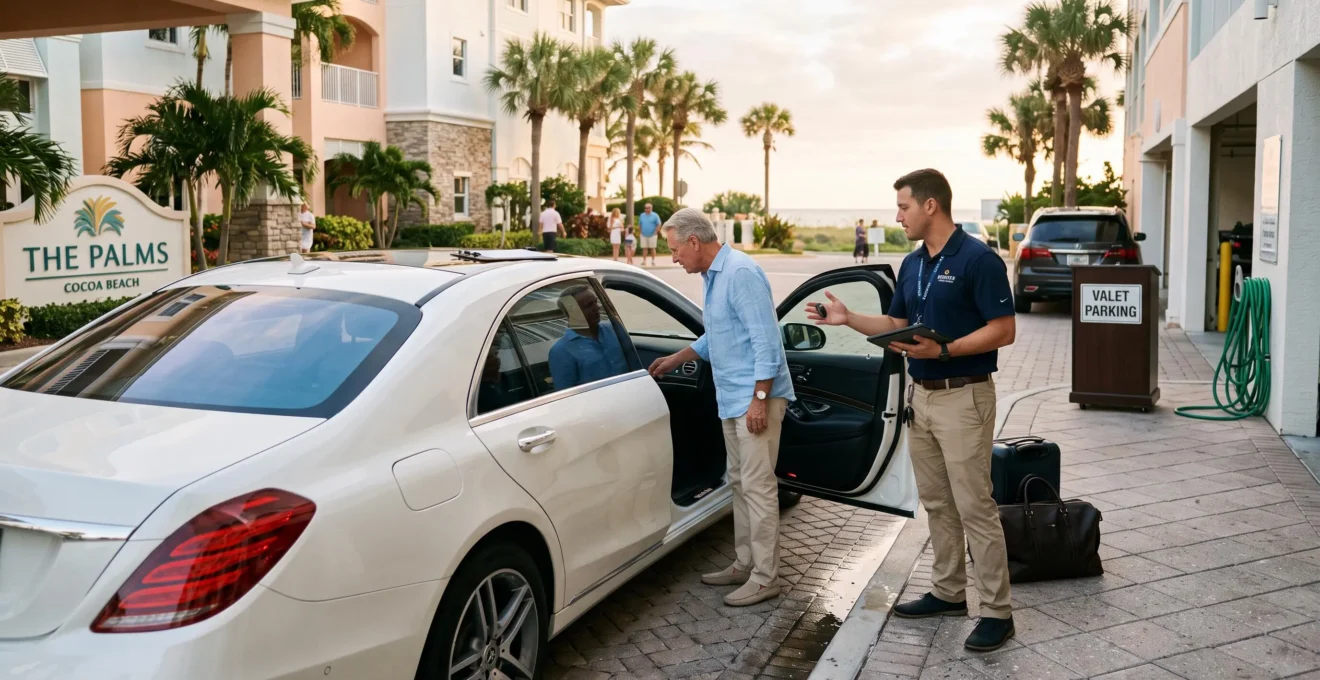
- How to Arrange a Luxury Rental With Hotel Delivery and Personalized Handover?
- Vehicle-Only or Concierge Package: Which Better Suits a Florida Celebration?
- Which Luxury Rental Package Details Should Be Confirmed in Writing?
- Which Luxury Rental Extras Are Worth Prioritizing for a One-Day Event?
- Sports Car or Luxury SUV: Which Suits a Florida Coastal Trip?
- Hotel Valet or Curbside Delivery: Which Rental Handover Is Easier?
- What Should You Check Before Renting a Classic Car for a Florida Event?
Why Do Luxury Rental Packages Differ for Weddings and Corporate Events?
Luxury rental packages differ because weddings prioritize visual presentation, coordinated arrivals, and memorable passenger experiences, while corporate events emphasize punctuality, discretion, and efficient transportation. A wedding may require a specific vehicle color and extended chauffeur availability; a business gathering typically benefits from dependable transfers, professional drivers, and predictable billing across scheduled appointments.
For a Florida wedding, the vehicle often becomes part of the visual composition. A pearl-white sedan, elegant convertible, or distinctive classic car may need to complement the venue, floral arrangements, and photography schedule. Confirm exterior condition, permissible decorations, and the exact position where the vehicle can stop for photographs.
Corporate transportation follows a different service logic. A luxury sedan or SUV should accommodate passengers comfortably, support efficient luggage handling, and arrive without disrupting meetings or guest movements. Understated styling and an experienced professional driver may provide more value than an exotic model.
Pricing structures should follow the itinerary. Wedding proposals may use multi-hour service blocks that account for ceremony arrivals, photography, receptions, and driver waiting periods. Corporate quotes may instead reflect individual transfers, hourly vehicle availability, or coordinated movements between several venues. These are possible quotation structures, not universal industry standards.
| Decision factor | Florida wedding | Corporate event |
|---|---|---|
| Primary priority | Presentation and synchronized arrivals | Punctuality and professional image |
| Vehicle selection | Exact color, appearance, and photo suitability | Passenger comfort, discretion, and capacity |
| Service duration | Ceremony, photography, and reception windows | Scheduled transfers or defined hourly blocks |
| Essential coordination | Wedding planner, photographer, and venue | Event coordinator, guests, and meeting locations |
| Contractual concern | Waiting time and multi-stop delays | Schedule changes and additional transfers |
Liability arrangements also deserve attention. Confirm every authorized driver, permission to access private venue roads, and responsibility for operational delays. A wedding planner coordinating arrivals is not automatically the party responsible under the rental agreement.
Florida’s insurance framework adds another consideration. Florida Statutes Section 627.7263 addresses priority of specified liability and personal injury protection insurance for rented vehicles, including contractual conditions for designating a renter’s insurance as primary. It does not resolve every question about collision damage or event delays.
Use the following decision rule: a fixed ceremony requires confirmed arrival windows; multiple guest groups require capacity planning; coordinated photographers or vendors require agreed vehicle positioning and waiting arrangements. These requirements should appear in the requested service tier rather than remain informal expectations.
Once the occasion’s priorities are established, the next challenge is ensuring the selected vehicle reaches the correct location with a handover that fits the event schedule.
How to Arrange a Luxury Rental With Hotel Delivery and Personalized Handover?
Arrange hotel delivery by confirming the exact property entrance, an agreed arrival window, and the hotel’s procedures for accepting third-party rental vehicles. A personalized handover should include vehicle identification, a guided controls demonstration, joint condition photographs, document verification, and a direct contact for assistance. Neither hotel access nor these services should be assumed without confirmation.
Begin with the rental provider. Supply the hotel’s full street address, reservation name, preferred delivery time, vehicle requirements, and whether a designated guest or organizer will accept the car. Ask the provider to specify who will conduct the handover and how schedule changes are communicated.
Next, coordinate with the hotel’s concierge or valet management. Resort entrances in Miami Beach, Palm Beach, and other Florida destinations may have restricted loading areas, controlled access, or specific procedures for third-party deliveries. These conditions depend on the property and must be verified individually.
- Confirm the delivery location: Obtain the hotel’s approved arrival point and any required access instructions.
- Set a practical time window: Avoid scheduling the walkthrough simultaneously with check-in, luggage collection, or event departures.
- Verify the rental documents: Review the authorized drivers, identification requirements, insurance provisions, and delivery charges.
- Inspect the vehicle together: Record exterior panels, wheels, interior surfaces, mileage, fuel level, and any pre-existing damage.
- Complete the handover: Request an explanation of essential controls and confirm the assistance contact and eventual return procedure.
For performance cars, the orientation should cover driving modes, parking controls, roof operation where applicable, and any special operating restrictions. A demonstration is particularly useful for guests unfamiliar with the model.
Ask whether the hotel imposes a delivery, parking, or valet charge, and who pays it. The provider should also confirm whether the car will remain attended until acceptance and what happens if the guest arrives late.
Florida’s heat and sudden rainfall make a sheltered inspection location worth requesting. Adequate lighting and an unobstructed view of the bodywork are more important than the ceremonial appearance of the handover.
A well-documented delivery establishes a clear starting point for the rental. The remaining decision is whether the guest should operate the vehicle independently or delegate transportation management to a concierge service.
Vehicle-Only or Concierge Package: Which Better Suits a Florida Celebration?
A vehicle-only package is generally better for confident drivers seeking privacy, route flexibility, and control over their schedule. A concierge package becomes more appropriate when a celebration involves multiple timed stops, guests who prefer not to drive, or coordination with an event planner. A hybrid arrangement can combine self-driving enjoyment with chauffeured transportation when the provider permits it.
Start with three questions: Can someone in the party comfortably operate the selected vehicle? Does the itinerary contain several time-sensitive arrivals? Must the rental company actively coordinate transportation during the event?
If driving confidence is high, the route is flexible, and no ongoing coordination is needed, a self-drive arrangement may be sufficient. When departures must align with speeches, ceremonies, restaurant reservations, or several passenger groups, professional chauffeur support becomes more valuable.
Concierge packages may include a chauffeur, itinerary coordination, waiting periods, guest collection, and communication with event organizers. However, individual providers define concierge service differently. Some offer little beyond a driver, while others provide broader operational coordination.
| Criterion | Vehicle-only rental | Concierge package |
|---|---|---|
| Who drives? | Authorized renter or additional driver | Provider-arranged professional chauffeur |
| Schedule management | Renter controls departures | Driver or coordinator may manage timing |
| Privacy | Private in-car experience | Driver normally remains present |
| Route flexibility | Subject to rental restrictions | Subject to agreed service window and itinerary |
| Typical quotation concerns | Mileage, fuel, insurance, late return | Hourly minimums, waiting, overtime, driver expenses |
The apparent simplicity of a concierge quotation can conceal significant differences in scope. Request an itemized price stating which hours include passenger transport, how waiting time is calculated, and whether chauffeur meals, parking, gratuities, or return journeys are additional charges.
Consider a hypothetical Miami-to-Palm Beach celebration. A couple might prefer self-driving a sports car during the scenic daytime portion, then switching to a chauffeured sedan for an evening reception. Such a combination can preserve the experience of driving while avoiding post-event logistics.
This hybrid option is not necessarily available from every provider. Ask whether separate vehicles, driver changes, different insurance arrangements, or revised pickup locations require individual agreements.
The best arrangement is the one whose operational responsibilities are clear. Whether the provider supplies only a vehicle or an entire transportation service, those responsibilities must be reflected in the booking documents.
Which Luxury Rental Package Details Should Be Confirmed in Writing?
A Florida luxury rental agreement should identify the exact vehicle, delivery and return arrangements, permitted drivers, mileage allowance, insurance provisions, cancellation conditions, and every paid extra. For special occasions, it should also address vehicle substitution, decorations, cleaning charges, waiting time, and weather disruptions. Written confirmation reduces misunderstandings about what the customer has actually purchased.
A reservation confirmation establishes certain booking details, but it may not contain every term governing the rental. The signed agreement, incorporated policies, and any properly accepted written amendments determine the contractual obligations. A promotional description or verbal assurance should not be treated as equivalent to a confirmed service commitment.
Vehicle identity matters. An agreement listing only a luxury vehicle category may allow substitution within that category. If photographs, wedding aesthetics, or guest expectations depend on a particular car, request the make, model, body style, exterior color, and any essential specifications.
Document the practical details as carefully as the vehicle selection. Delivery and collection addresses, scheduled times, authorized drivers, fuel requirements, mileage limits, detailing charges, and decoration permissions should be unambiguous.
The Federal Trade Commission rental car advice recommends evaluating the full rental cost rather than the advertised rate alone. Its guidance identifies potentially relevant charges and restrictions involving additional drivers, mileage, fuel, late returns, and optional protection.
Five Contract Checks Before Confirming Your Florida Luxury Rental
- Request the exact vehicle specification, including model and color, and retain the provider’s written confirmation.
- Submit the final itinerary, delivery address, pickup arrangements, and event schedule; obtain a dated service schedule.
- Identify every authorized driver and review the applicable insurance documents; retain a written coverage summary or relevant policy terms.
- Request an itemized quotation covering mileage, fuel, waiting time, overtime, decorations, cleaning, and delivery; save the complete cost breakdown.
- Review substitution, cancellation, refund, and weather-related rescheduling provisions; obtain the agreed final contract before payment.
Cancellation and substitution provisions require particular care. Determine whether the provider can replace the selected vehicle, what qualifies as an acceptable substitute, and whether the customer may reject it. Establish the applicable notice periods and the treatment of deposits and prepaid amounts.
Florida weather creates an additional planning concern. The NOAA hurricane preparedness recommendations identify June 1 through November 30 as the official Atlantic hurricane season. This seasonal period does not create an automatic rental refund entitlement. The agreement should specify what happens if an event is postponed, transportation becomes unavailable, or severe weather prevents safe operation.
Where champagne service, floral arrangements, complimentary detailing, or extended waiting periods have been discussed, request separate written line items. This also helps identify services that are conditional, unavailable at certain venues, or excluded from the base rate.
A complete agreement makes package comparisons more meaningful. Once core services and contractual limits are established, optional upgrades can be assessed according to their actual contribution to the occasion.
Which Luxury Rental Extras Are Worth Prioritizing for a One-Day Event?
For a one-day Florida luxury rental, prioritize extras that protect the event schedule and guest experience: dependable delivery, appropriate chauffeur support, a presentation-ready vehicle, and adequate mileage and time allowances. Comfort upgrades and elaborate decorations should come afterward. Short bookings leave relatively little room to absorb delays, making operational flexibility particularly valuable.
A useful distinction is whether an extra affects the success of the occasion or simply improves the renter’s personal experience. Delivery at a precise venue entrance may be essential to a wedding arrival, while an upgraded entertainment system may contribute little to a short journey.
Similarly, professional detailing can matter when the car appears prominently in photographs. Additional decorative packages have less practical value if the venue restricts attachments or the selected vehicle already satisfies the visual brief.
| Extra | Suggested priority | Reason |
|---|---|---|
| Confirmed timed delivery | High | Protects scheduled arrivals |
| Chauffeur or event coordination | High when needed | Reduces passenger transport responsibilities |
| Pre-event vehicle detailing | High for photographed events | Supports visual presentation |
| Realistic mileage allowance | High | Reduces exposure to excess-mileage charges |
| Agreed overtime flexibility | High for tight schedules | Addresses foreseeable event delays |
| Premium decorations | Optional | Primarily aesthetic benefit |
| Prepaid fuel | Compare alternatives | May cost more than self-refueling |
Optional insurance products require separate evaluation. Existing personal auto insurance or credit card benefits may offer relevant protection, but eligibility depends on the agreement, vehicle category, payment method, and policy exclusions. Exotic, high-performance, and classic vehicles should never be presumed covered by ordinary card benefits.
Request written confirmation from the insurer or card benefit administrator before declining offered protection. Collision damage waivers and liability insurance address different exposures, so the presence of one does not establish the availability of the other.
Overtime and mileage deserve special attention. For a one-day event, a delayed reception or an unexpected additional stop can consume a substantial portion of the agreed rental window. Ask for a realistic distance allowance and a defined grace period, with the subsequent billing method clearly stated.
A grace period must be established by the provider’s terms; it should not be inferred from general rental-industry practices. Also compare any prepayment for fuel with the cost and convenience of refueling independently.
After selecting the essential services, consider the vehicle’s practical suitability. Florida’s coastal routes, passenger groups, and changeable weather can make body style a more consequential choice than appearance alone.
Sports Car or Luxury SUV: Which Suits a Florida Coastal Trip?
A sports car suits a Florida coastal trip when driving enjoyment, distinctive styling, and a small passenger group are the priorities. A luxury SUV is generally more practical for multiple travelers, luggage, beach equipment, and flexible event schedules. Weather, parking conditions, and cargo requirements should determine the final choice rather than appearance alone.
A convertible can make a coastal drive memorable, particularly when the itinerary includes scenic stops and opportunities to enjoy open-air travel. However, luggage capacity may be limited, especially when the roof mechanism occupies part of the available storage space.
Sports cars also vary considerably in passenger accommodation. A two-seat model can require a second vehicle when more than two people must travel together, increasing transport coordination, parking requirements, and potentially total rental cost.
Luxury SUVs typically offer more seating configurations, enclosed cargo capacity, and space for formalwear, beach bags, or event equipment. They can also simplify a group itinerary by keeping passengers together, although actual capacity depends on the specific model and luggage dimensions.
On busy coastal streets such as Miami Beach’s Ocean Drive, maneuverability, visibility, and parking access may matter more than engine performance. Low sports cars can require particular attention around steep driveway transitions and uneven entrances. Larger SUVs may create their own parking and maneuvering challenges.
Florida weather should influence both vehicle selection and the itinerary. For a convertible, verify that the roof operates properly and confirm whether covered parking is available. For any high-value vehicle, discuss the provider’s procedures if severe weather interrupts the planned route.
Flooding is an entirely separate safety consideration. The National Weather Service warns that flooded roads can conceal serious hazards and should never be crossed. SUVs are not inherently safe for floodwater crossings, and greater ground clearance does not justify entering a flooded street.
Where coastal driving is only one component of a larger occasion, a sports car for two participants and a separate group transfer may be appropriate. Compare the total cost and timing before choosing this arrangement over a single luxury SUV.
The vehicle selected should support the entire journey without compromising passenger comfort or scheduling. Its delivery method then becomes the next practical decision, particularly at busy resorts and event hotels.
Hotel Valet or Curbside Delivery: Which Rental Handover Is Easier?
Hotel valet handover generally offers greater convenience when guests arrive with luggage or need the vehicle managed by hotel staff. Curbside delivery provides more direct control because the renter can meet the rental agent, inspect the car, and document its condition before acceptance. The easier option depends on hotel access rules, scheduling needs, and how responsibility is documented.
With valet handover, the rental provider may deliver the car to the hotel’s valet operation before the guest collects it. This can simplify arrival logistics, but it introduces an additional party into the vehicle’s custody.
Curbside delivery places the rental agent and customer together at an agreed location. It is often better suited to a personalized vehicle orientation and joint photography, especially when an unfamiliar sports car or high-value luxury model is involved.
The main contractual question is not simply which party possesses the keys. It is when the rental begins and which party is responsible for the vehicle at each stage.
Florida’s rental insurance priority rules address specified insurance arrangements, but they do not establish a universal moment when responsibility transfers between the rental company, a hotel valet, and the renter. Actual damage responsibility requires consideration of the agreement, applicable policies, and the circumstances.
| Factor | Hotel valet | Curbside delivery |
|---|---|---|
| Guest convenience | Often easier with luggage | Requires a coordinated meeting |
| Condition inspection | Must be separately arranged if not conducted directly | Can be completed jointly with the agent |
| Key handling | May involve hotel staff | Usually direct between provider and renter |
| Vehicle orientation | Requires specific coordination | Can occur during acceptance |
| Main concern | Custody and damage documentation | Timing and approved stopping location |
Before selecting valet handover, ask whether the hotel accepts third-party rental vehicles and whether hotel personnel are authorized to move the specific car. Confirm parking charges, key custody procedures, and how any damage occurring before customer acceptance will be handled.
For curbside service, verify that the property permits a suitable stopping period. The renter should have enough time for photographs and a controls walkthrough without blocking traffic or violating property rules.
For luxury vehicles requiring especially careful inspection, direct handover is often the more controllable process. That becomes even more important when the rental involves an older, collectible vehicle with distinctive operating limitations.
Key Takeaways Before Selecting a Classic Car
- Confirm whether the vehicle is genuinely available for self-driving or restricted to chauffeur-operated service.
- Verify the exact year, body style, color, and operating condition when the vehicle’s appearance is essential to the occasion.
- Require written insurance, breakdown assistance, and substitution arrangements before committing to a time-sensitive event.
What Should You Check Before Renting a Classic Car for a Florida Event?
Before renting a classic car for a Florida event, verify the exact vehicle identity, driving restrictions, mechanical condition, insurance arrangements, and breakdown response. Classic rentals may impose tighter mileage limits, chauffeur requirements, or usage restrictions than modern luxury vehicles. When the car is central to a wedding or celebration, substitution terms and documented condition are particularly important.
Classic vehicles are frequently chosen for their design, historical character, or visual compatibility with formal events. Yet two cars of the same general model family can differ significantly in appearance, cabin features, and operating condition.
Request the exact model year, body style, color, and photographs of the specific vehicle offered. A general listing for a vintage convertible does not guarantee that the vehicle ultimately supplied will match the example shown in promotional materials.
Operating restrictions should be established before booking. Depending on the vehicle and provider, self-driving may be unavailable, certain road types may be restricted, or special mileage and speed conditions may apply. These are provider- and vehicle-specific requirements, not universal rules governing all classic rentals.
Mechanical suitability deserves particular attention in Florida. Confirm that the air conditioning functions, where fitted, and that a convertible roof or soft top operates correctly. Ask whether the vehicle can reasonably accommodate the planned passengers, route, and driving conditions.
Condition photographs are particularly useful for documenting aged paintwork, chrome trim, leather upholstery, wheels, and existing cosmetic imperfections. Record visible defects with the rental representative and obtain acknowledgment of the inspection. This creates a contemporaneous reference if damage is disputed after the event.
Insurance requires specific confirmation. Ask whether the provider’s coverage applies to the particular classic vehicle, whether the renter is authorized to drive it, and what financial responsibility remains for damage, theft, or other losses. Ordinary rental-car benefits should not be assumed to extend to collectible or vintage models.
The breakdown plan is equally important. A classic car may need specialist assistance or transport rather than an ordinary roadside repair. Confirm whom to contact, where recovery service is available, and whether the provider offers a backup vehicle or alternative transportation if the car cannot complete the itinerary.
For example, in a hypothetical Palm Beach wedding, a classic convertible scheduled for a ceremonial arrival might develop a mechanical problem before the ceremony. The appropriate response depends on whether the agreement provides replacement transportation, a different vehicle, rescheduling, or a refund. None of these remedies should be presumed without contractual support.
Finally, address substitution explicitly. If a particular vintage model is important to the event’s visual identity, request written approval rights before any replacement is supplied. A different car from the same era may not satisfy the original brief.
Before committing to a classic rental, send the provider the event itinerary, required vehicle specifications, and inspection expectations. Request a final written proposal addressing operating permissions, insurance, recovery assistance, and substitution. This makes the vehicle’s distinctive character an intentional part of the celebration rather than an avoidable logistical uncertainty.
How far in advance should a luxury car be reserved for a Florida special event?
Reserve once the event date, vehicle requirements, and essential itinerary details are sufficiently established. The appropriate lead time varies by provider, vehicle availability, and occasion. A particular color, collectible model, or coordinated chauffeur arrangement may require additional planning. Ask the rental provider to confirm availability, reservation conditions, and any payment deadlines rather than relying on an assumed booking window.
Can a luxury rental package include more than one authorized driver?
Some providers permit additional drivers, subject to their eligibility requirements, documentation, and possible fees. Every person who may operate the vehicle should be specifically authorized under the agreement. Certain high-performance or classic rentals may impose additional restrictions. Unauthorized driving can also affect contractual protection, including collision damage waiver benefits.
Can event decorations be attached to a luxury rental vehicle?
Decorations may be allowed when the provider expressly approves them. Request written guidance covering ribbons, flowers, adhesive materials, temporary accessories, and any installation requirements. Confirm whether removal or additional detailing incurs a charge. Approval should address the specific vehicle because delicate finishes, convertible roofs, and collectible exterior components may require special precautions.
What happens if severe weather disrupts a Florida luxury rental?
The outcome depends on the provider’s cancellation, rescheduling, and service interruption terms. Request clarification about deposits, unused rental hours, alternative delivery arrangements, and vehicle availability following postponement. During severe weather, follow official warnings and avoid flooded roads. A hurricane warning or storm-related disruption does not automatically establish a specific refund entitlement under every rental agreement.
Should the event organizer or the traveler sign the rental agreement?
The contracting party should be the individual or organization accepted by the rental provider and capable of meeting its payment, identification, and responsibility requirements. An organizer may coordinate the service without becoming an authorized driver or the renter. For corporate bookings, clarify the relationship between the paying company, the contracting party, the authorized drivers, and the passengers before the agreement is executed.