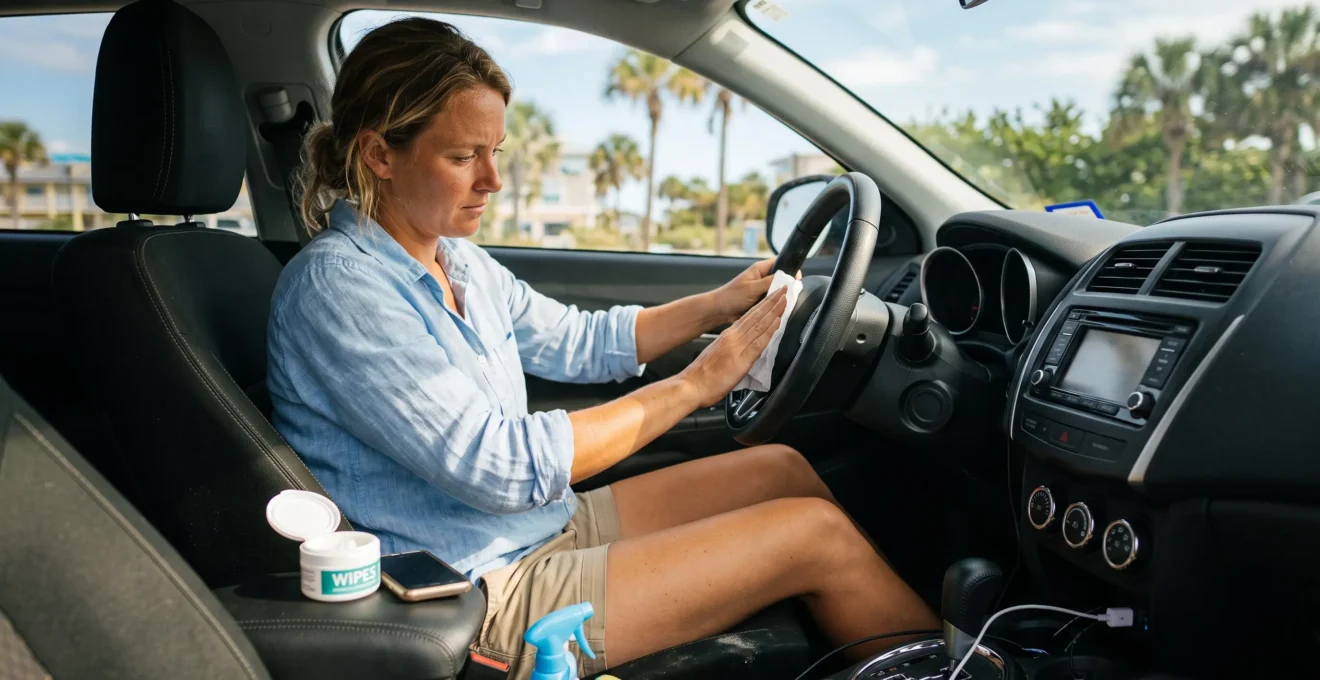
Keeping a rental car clean during a Florida vacation requires more than removing visible dirt. Shared steering wheels, door handles, seatbelt buckles, and dashboard controls receive repeated contact from different drivers and passengers. Meanwhile, beach sand, sunscreen, food spills, and wet swimwear can quickly affect cabin cleanliness during a family road trip.
The most practical approach combines regular cleaning of frequently touched surfaces, material-safe products, immediate spill management, and a documented vehicle inspection. Routine cleaning is generally sufficient for everyday hygiene, while disinfection becomes more relevant when someone is ill or additional infection precautions are necessary.
Florida’s combination of coastal activities, strong sunshine, and frequent transitions between outdoor heat and air-conditioned interiors also makes preventive care worthwhile. Travelers do not need to detail the entire vehicle every day. A short, consistent routine focused on shared contact points, moisture, and accumulating debris helps maintain a comfortable cabin without risking avoidable damage or additional rental charges.
Florida Rental Car Hygiene: Essential Practices
- Prioritize steering wheels, door handles, seatbelt buckles, and other frequently touched surfaces using cleaners compatible with their materials.
- Clean visible dirt before disinfecting, and use disinfectants only when appropriate, following their specified contact times.
- Prevent sand and spills from accumulating, document existing interior problems at pickup, and check the cabin before returning the vehicle.
- Why Do Steering Wheels and Door Handles Need Regular Cleaning?
- How to Clean Rental Car Touchscreens and Controls Safely?
- Cleaning or Disinfection: What Does a Shared Rental Car Actually Need?
- Which Household Cleaners Should You Avoid on Rental Car Interiors?
- How to Manage Beach Sand and Spills During a Florida Road Trip?
- Why Do Rental Car Interiors Show Wear Faster Than Private Vehicles?
- Which Handover Details Should You Confirm Before Signing?
- What Should You Check When Collecting a Rental Car in Florida?
Why Do Steering Wheels and Door Handles Need Regular Cleaning?
Steering wheels and door handles deserve regular cleaning because they are frequently touched surfaces that can collect dirt, skin oils, and microorganisms transferred from hands. In a rental car, previous contact history is unknown. Cleaning these areas helps reduce surface contamination without requiring passengers to sanitize the entire cabin after every stop.
Consider a typical Florida road trip. A driver handles a gas pump, opens a convenience-store door, loads luggage, and then touches the driver’s door handle and steering wheel. Passengers may similarly transfer residue from shopping carts, beach equipment, and public facilities to the vehicle interior.
These interactions make high-contact surfaces sensible cleaning priorities, although they do not establish that steering wheels or handles are necessarily the most infectious parts of a vehicle. Actual infection risk depends on the microorganism, transfer conditions, hand hygiene, and exposure.
The CDC recommendations for cleaning and disinfecting surfaces explain that regular cleaning removes dirt and many germs. The guidance concerns household environments rather than rental vehicles, but its principles apply to frequently handled, compatible interior surfaces.
A quick-touchpoint assessment is more practical than trying to clean every component. During the first thirty seconds after entering the vehicle, observe which surfaces people actually touch. A family’s priority list might include:
- Exterior and interior door handles.
- Steering wheel and commonly used steering-wheel controls.
- Seatbelt buckles and frequently handled belt hardware.
- Gear selector or shift lever.
- Window switches and door-mounted controls.
- Climate-control buttons and frequently used dashboard knobs.
- Grab handles and other shared passenger contact points.
Not every occupant touches every item. Instead, these surfaces form a practical checklist that can be adapted to the vehicle and passenger habits. Cleaning them at pickup, when visibly dirty, and regularly during the rental is usually a manageable routine.
Material selection matters, particularly for steering wheels wrapped in leather or synthetic leather. Skin oils, moisture, and unsuitable cleaners can affect finishes over time. Use a lightly dampened microfiber cloth or an approved material-specific product, avoiding oversaturation and aggressive rubbing.
Once the main contact surfaces are addressed, attention can shift to electronic displays and controls, which require a gentler cleaning technique than most door handles or hard trim.
How to Clean Rental Car Touchscreens and Controls Safely?
Clean a rental car touchscreen by turning off the display, gently wiping it with a clean microfiber cloth, and using only a screen-compatible cleaning solution when necessary. Apply moisture to the cloth rather than directly to the display. Avoid excessive pressure, abrasive materials, and unapproved chemicals that could damage protective coatings or electronic components.
Modern rental cars often combine navigation, entertainment, climate settings, and vehicle information within a single touchscreen. Fingerprints and smudges accumulate quickly, especially when multiple passengers interact with the system. However, these displays may have delicate anti-glare, anti-fingerprint, or other protective coatings.
According to Toyota‘s car interior cleaning instructions, microfiber cloths and suitable LCD cleaners are preferable to abrasive products, while touchscreens should be switched off before cleaning. The exact procedure still depends on the vehicle model and its manufacturer’s instructions.
A safe basic method follows five steps:
- Park the vehicle safely, switch off the display, and allow the surface to cool if it has been exposed to direct sunlight.
- Use a clean, dry microfiber cloth to remove loose dust and fingerprints without pressing firmly.
- If marks remain, lightly dampen another microfiber cloth with water or a manufacturer-approved screen cleaner.
- Wipe gently without allowing liquid to collect along the screen edges, buttons, or surrounding trim.
- Remove remaining moisture with a dry microfiber cloth before switching the system back on.
Never assume that a glass-looking screen is resistant to alcohol. A display may have a protective coating that reacts differently from the underlying glass. Isopropyl alcohol may be permitted for certain screens but can damage others. Check the owner’s manual or obtain rental-company guidance before applying it. A corner test is not a reliable substitute for manufacturer approval because coating damage may be permanent.
Physical buttons, rotary knobs, and climate controls need a slightly different approach. A soft-bristle brush can loosen dust around their edges, while a carefully used cotton swab may help remove accessible debris from narrow seams. Avoid forcing tools into gaps or introducing moisture around electrical controls.
After cleaning, check that the screen responds normally and that the rearview camera image is clear when the system is safely tested. Screen damage or residue could interfere with visibility of displayed information; cleaning the screen does not ordinarily alter the parking sensors themselves.
Electronics illustrate an important distinction: removing fingerprints is not the same as disinfecting a surface. The next decision is whether additional antimicrobial treatment is actually necessary.
Cleaning or Disinfection: What Does a Shared Rental Car Actually Need?
A shared rental car generally needs routine cleaning, while disinfection is an additional precaution for situations involving illness or increased vulnerability to infection. Cleaning removes dirt and many germs; disinfecting uses an appropriate chemical product to kill specified microorganisms. When both procedures are needed, clean visible contamination first and follow the disinfectant’s instructions.
These processes serve different purposes. Cleaning physically removes contaminants through wiping, soap, water, or other suitable methods. Disinfection relies on an approved product applied to compatible surfaces under the conditions specified on its label.
A newly collected rental vehicle does not automatically need extensive chemical disinfection simply because another traveler previously used it. The CDC explains that cleaning alone generally removes most harmful germs in ordinary circumstances, while disinfection becomes more relevant when someone is sick or has a weakened immune system.
For families traveling through Florida, a practical decision framework can prevent both unnecessary chemical use and neglected dirt.
| Situation | Recommended action | Reason |
|---|---|---|
| Normal daily use | Clean commonly touched surfaces as needed or on a regular schedule. | Controls routine residue and surface contamination. |
| After a beach visit | Remove sand, shake out mats, and wipe affected areas. | Addresses abrasive particles and tracked-in debris. |
| Food or drink spill | Blot promptly and clean with a material-safe method. | Helps prevent staining, stickiness, and lingering odors. |
| After transporting pets, where permitted | Remove hair and debris, vacuum suitable surfaces, and address any soiling. | Limits accumulated allergens, odors, and additional cleaning needs. |
| Passenger illness or elevated infection risk | Clean affected surfaces, then disinfect appropriate hard surfaces when indicated. | Provides additional control of relevant microorganisms. |
Disinfectant contact time is particularly important. A product may need to remain visibly wet for the complete duration printed on its label. Wiping the surface dry immediately can prevent the disinfectant from achieving its labeled performance.
“The surface should stay wet during the entire contact time to make sure germs are killed.”
This requirement does not mean soaking a steering wheel, touchscreen, or control panel. If maintaining the required wet contact time could damage a material or electronic component, do not use that disinfectant there. Choose a compatible approved method or seek guidance from the rental company.
Rental companies commonly clean vehicles between bookings, but procedures differ by operator and location. Travelers should not assume a particular sanitation standard unless the company confirms it. Their own cleaning routine is best treated as an additional precaution during the rental, not a replacement for the operator’s vehicle preparation.
Once disinfection is limited to appropriate circumstances, product compatibility becomes the next priority. A cleaner that performs well on a kitchen counter may be unsuitable for vehicle trim.
Which Household Cleaners Should You Avoid on Rental Car Interiors?
Avoid bleach-based cleaners, ammonia-based glass cleaners, abrasive creams, and aggressive household degreasers on rental car interiors unless the vehicle manufacturer explicitly approves them. These products can discolor upholstery, damage protective coatings, dull plastic trim, or affect leather finishes. Mild cleaning methods and automotive products matched to the surface are generally safer choices.
A rental vehicle may contain leather, synthetic leather, fabric, vinyl, painted trim, and delicate display coatings within the same cabin. No single household cleaning product should be assumed suitable for all these materials.
Several common products deserve particular caution:
- Bleach-based cleaners: May discolor fabrics, degrade certain finishes, or damage compatible materials if used improperly. Avoid them unless explicitly authorized for the exact surface and application.
- Ammonia-based glass cleaners: Can harm some tinted window films, display coatings, and interior finishes. Check the glass and film manufacturer’s instructions.
- Abrasive cream cleansers: May scratch glossy plastic, touchscreen coatings, decorative trim, and other finished surfaces.
- Strong degreasers and solvents: Can strip protective treatments, affect adhesives, and change the appearance or feel of certain plastics and upholstery.
A lightly dampened microfiber cloth is an appropriate starting point for many hard interior surfaces. Where the manufacturer permits it, a small amount of mild soap diluted in water can help remove stubborn residue. Avoid excess water and remove remaining soap with a clean, lightly dampened cloth.
Leather deserves additional care. Use a cleaner specifically approved for the material, rather than applying generic disinfectants, alcohol, or household detergents. Some synthetic coverings resemble leather but have different maintenance requirements.
Alcohol-based disinfectants require similar caution. Their suitability depends on the product formulation, the material, and the vehicle manufacturer’s guidance. There is no universally safe isopropyl alcohol concentration for every rental car interior.
Testing an approved product on a small, inconspicuous area can help identify obvious incompatibility, although it cannot guarantee that repeated use will be harmless. If a surface becomes sticky, dull, discolored, or unusually soft, stop cleaning immediately. Do not try to reverse the change with stronger chemicals; seek appropriate guidance instead.
The financial consequences also matter. A damaged finish may be assessed separately from ordinary cleaning, subject to the rental agreement, vehicle condition records, and the company’s inspection procedures. Such charges are not automatic, and their validity can be disputed.
If damage was already present at pickup, document it before applying any product. Clear photographs and written acknowledgment from the rental location help distinguish pre-existing defects from changes during the rental.
Product selection is only part of cabin maintenance. During a Florida beach vacation, physical debris and moisture often demand more attention than chemical cleaners.
How to Manage Beach Sand and Spills During a Florida Road Trip?
Manage beach sand and spills by preventing debris from reaching upholstery, removing loose particles regularly, and treating liquids immediately with absorbent materials. Use removable towels, sealed bags for wet belongings, and a vacuum for sand. Before returning the rental car, remove accumulated trash and excessive debris to reduce the likelihood of additional cleaning charges.
Florida beach days introduce several cabin-cleanliness challenges. Sand clings to footwear and towels, sunscreen transfers to seats and door panels, and damp swimwear can leave upholstery wet. Families traveling with children may also need to manage snacks, drinks, and frequent stops.
Sand behaves differently from ordinary dust. Its abrasive particles can work into carpet fibers, upholstery seams, and seat rails. Repeated movement may cause friction and make embedded particles difficult to remove.
Prevention is therefore more efficient than attempting to extract sand from fabric after several days of travel.
- Shake sand from footwear, bags, and beach equipment before loading the vehicle.
- Use a removable towel or fitted seat cover where permitted, keeping seatbelts and child-restraint equipment unobstructed.
- Store wet swimwear and sandy items in sealable bags until they can be dried or cleaned.
- Carry a compact handheld vacuum or use a suitable gas-station vacuum when available.
- Remove floor mats for cleaning when practical, ensuring they are completely dry and properly secured before driving.
When shaking mats, do so in a permitted area and avoid leaving debris where it creates a nuisance. Never place loose towels or additional mats near the driver’s pedals, and do not allow protective coverings to interfere with airbags.
Spills require a different response. Blot liquids promptly with a clean, absorbent cloth rather than rubbing them deeper into the fabric. If the upholstery permits water-based cleaning, use a small amount of water or appropriately diluted mild soap, then blot away remaining moisture.
Avoid saturating seat cushions. Moisture trapped in upholstery can contribute to persistent odors and, under suitable conditions, microbial growth. If a spill reaches the underlying foam or creates a strong odor, inform the rental company instead of attempting invasive cleaning.
The distinction between normal use and chargeable soiling depends on the rental contract. Avis, for example, explains in its US customer service guidance that additional cleaning fees may apply when interior stains, dirt, odors, or other soiling attributable to the renter cannot be removed through standard post-rental cleaning. This does not establish a separate Florida-wide sand fee, nor does it mean that a few grains automatically generate a charge.
Reserve approximately fifteen minutes before drop-off for a practical final inspection. Remove food packaging, vacuum obvious accumulations if necessary, check cupholders and seats, and photograph the cabin after cleaning. This is a useful planning allowance, not an industry-mandated cleaning period.
Even with careful cleaning, some interior imperfections may remain. Understanding ordinary rental-fleet wear helps travelers distinguish existing deterioration from soiling that occurred during their vacation.
Why Do Rental Car Interiors Show Wear Faster Than Private Vehicles?
Rental car interiors can show wear more quickly than comparable privately owned vehicles because they experience frequent driver changes, repeated luggage handling, and varied passenger habits. High-use controls, seat bolsters, carpets, and trim may deteriorate under these conditions. However, actual wear depends on mileage, maintenance, fleet age, and how individual vehicles have been treated.
Unlike a personal vehicle used by a relatively consistent group of drivers, a rental car may accommodate travelers with different driving positions, luggage requirements, cleaning habits, and trip purposes.
Repeated seat adjustments, contact with steering-wheel controls, and movement across seat bolsters create mechanical wear. Frequent loading and unloading can also mark trunk trim, door sills, and interior plastic panels.
Florida adds environmental considerations. Sunlight passing through windows can contribute to fading and deterioration of susceptible materials over time, while high cabin temperatures may place additional stress on certain finishes. Repeated transitions between outdoor heat and air-conditioned interiors can also influence moisture conditions, depending on vehicle design and use.
These factors do not mean that every rental vehicle accumulates more annual mileage than every private car. Fleet utilization varies substantially. Nor is there a universal retirement schedule: rental operators make replacement decisions according to business needs, vehicle condition, mileage, and other factors.
Routine reconditioning cannot reverse all cumulative wear. Cleaning may remove dirt and residue, but it does not restore cracked leather, scratched plastic, damaged coatings, or ultraviolet-related discoloration.
For travelers, this makes the pickup inspection especially important. Areas worth examining include:
- Driver’s seat bolsters, upholstery stitching, and visible stains.
- Steering-wheel finish and frequently handled controls.
- Dashboard discoloration, cracks, or sticky surfaces.
- Door trim, cupholders, and luggage-area panels.
- Carpets and floor mats showing heavy wear or embedded debris.
Document any pre-existing damage before leaving the rental location. During the trip, park in shade when safely available, consider a properly fitted sunshade while parked, and handle trim gently. Use products compatible with the vehicle materials rather than attempting aggressive restoration.
That distinction becomes financially important when the vehicle is handed over. A clear condition record provides a stronger basis for resolving later questions about stains, scratches, and other interior defects.
Which Handover Details Should You Confirm Before Signing?
Before signing or accepting a rental vehicle, confirm its recorded condition, fuel level, mileage, applicable cleaning charges, and return procedures. Inspect the interior for stains, odors, sand, and damaged trim, and ask the rental company to acknowledge existing problems. Clear documentation helps reduce uncertainty if a cleanliness or damage charge is raised later.
Rental handovers involve more than receiving the keys. The renter should understand which conditions are already documented, what responsibilities apply during the rental, and how the vehicle must be returned.
The FTC consumer advice on renting a car recommends reviewing rental terms, additional fees, fuel arrangements, and insurance or damage-waiver options. These principles are relevant to Florida rentals, although specific obligations depend on the agreement and company.
Inspect before accepting the recorded condition. Walk around the vehicle, examine accessible exterior panels, and check the cabin thoroughly. Look for upholstery stains, cigarette or mildew odors, excessive debris, damaged controls, and scratched trim.
Use a phone to capture clear photographs or video of the vehicle’s exterior and interior, including the dashboard, seats, floor mats, odometer, and fuel gauge. Preserve the original files and their available timestamp information until any final charges have been resolved.
If the agent identifies existing damage or acknowledges a cleaning problem, request written confirmation through the condition report, rental record, email, or another company-approved channel. Photographs are useful supporting evidence, but they do not automatically override contractual terms or guarantee that a dispute will be resolved in the renter’s favor.
Five Handover Checks to Complete Before Leaving
- Inspect the exterior and cabin: Produce a photo record showing visible dents, scratches, upholstery stains, and other existing defects.
- Check cleanliness and odors: Record any sand, trash, smoke smell, mildew odor, or sticky controls, and obtain written acknowledgment where possible.
- Verify vehicle information: Photograph the odometer and fuel gauge, then confirm they match the rental record or have been corrected.
- Review financial conditions: Identify the applicable cleaning, smoking, damage, fuel, and optional-service provisions in the agreement.
- Confirm return and assistance procedures: Save the return location, operating hours, after-hours instructions, and contact details for reporting vehicle problems.
Pay particular attention to language describing excessive soiling. A company’s standard vehicle cleaning is not necessarily the same as additional cleaning required for persistent stains or odors. Ask what the specific agreement covers rather than assuming all operators use identical criteria.
At participating locations, after-hours returns may involve a key drop, but responsibility for the vehicle can continue until the company checks it in. Avis describes this possibility in its US customer service FAQ. Other operators may apply different rules, making written return instructions important.
Finally, confirm what to do if a cleanliness or hygiene issue becomes apparent only after leaving the lot. A prompt report, accompanied by photographs where useful, may allow the operator to assess the problem or arrange a vehicle exchange.
With the contract and documentation process understood, the final task is a practical pickup inspection that combines mechanical readiness, passenger comfort, and hygiene.
Key Takeaways Before Collecting Your Rental Car
- Separate existing wear from new damage by recording visible defects before driving away.
- Confirm that the rental agreement explains cleaning liability and the applicable return procedure.
- Make cabin hygiene part of vehicle acceptance, alongside safety equipment and essential operating functions.
What Should You Check When Collecting a Rental Car in Florida?
When collecting a rental car in Florida, verify the vehicle and booking details, inspect its exterior and interior, confirm essential equipment works, and document existing damage before departure. Pay particular attention to air conditioning, signs of sun exposure, beach sand, upholstery cleanliness, and cabin odors. A structured inspection helps identify problems while assistance is readily available.
Allow approximately ten to fifteen minutes for a focused pickup inspection, with additional time if the vehicle is dirty or damaged. This is a practical planning estimate rather than a formal rental requirement.
Start with the basic vehicle details. Confirm that the car matches the agreed booking category and that its license plate, fuel reading, and odometer information correspond with the rental documentation where recorded.
Next, inspect the exterior. Look for visible damage to body panels, wheels, windshield, lights, and mirrors. Check the tires for obvious damage or unsafe appearance. If something raises a safety concern, ask rental staff to inspect it rather than attempting to judge a mechanical fault yourself.
Florida-specific checks are particularly useful:
- Air conditioning: Test the system immediately and verify that it produces cool airflow. A poorly functioning system can significantly affect comfort in Florida’s heat.
- Sun-exposed materials: Examine the dashboard, steering wheel, seats, and window trim for visible cracking, discoloration, or damaged finishes.
- Beach residue: Inspect floor mats, seat seams, the trunk, and accessible storage compartments for excessive sand or debris.
- Cabin odors: Notice persistent smoke, mildew, or other unusual smells before accepting the vehicle.
- Passenger areas: Check seatbelts, buckles, child-restraint attachment points where needed, and accessible seating surfaces.
Then perform a separate hygiene inspection. Look closely at the steering wheel, gear selector, door handles, and frequently used controls. If these surfaces are visibly dirty, request appropriate cleaning or a replacement vehicle before departure when the condition is unacceptable.
Once the vehicle has been accepted, clean high-touch surfaces with material-compatible supplies. A microfiber cloth and suitable cleaning product are generally more useful than applying powerful disinfectants indiscriminately.
Test essential controls while stationary, including headlights, signals, windshield wipers, windows, climate settings, and the infotainment display. For family travel, confirm that any required child restraints can be installed correctly according to their instructions and applicable requirements.
Do not overlook the vehicle’s digital condition. If a previous renter’s destinations, contacts, or paired devices remain visible in the infotainment system, avoid accessing their personal information and notify the operator when appropriate. Before returning the vehicle, delete your own paired-device information and saved personal data, following manufacturer instructions. This is also recommended by the FTC.
Finally, make sure any existing problems have been documented through the rental company’s accepted process. Completing an inspection does not itself determine liability for every defect, but contemporaneous records can support a later discussion.
Before leaving the rental lot, save the condition photographs, confirm that necessary equipment works, and address any unresolved cleanliness concerns with the rental staff. During the trip, keep a small microfiber cloth, approved cleaning supplies, and a bag for trash accessible. This simple preparation makes maintaining a clean Florida rental car easier from pickup through return.
Should you bring your own cleaning supplies when renting a car in Florida?
Bringing a clean microfiber cloth, a small bag for trash, and a material-compatible cleaner can make daily maintenance easier. If carrying disinfectant wipes, confirm that they are suitable for the intended surface and follow their label directions. Keep liquids secured during travel and avoid storing products in excessive heat or direct sunlight, particularly when their labels warn against it.
Can you request another rental car if the interior is dirty at pickup?
Yes, travelers can request assistance or a vehicle exchange when a rental car is unsatisfactory. Avis, for example, advises customers who receive a dirty or otherwise unsuitable vehicle to return to the rental location to request an exchange. Whether another vehicle is immediately available depends on the operator and location. Photograph the problem and seek written acknowledgment before leaving.
Is a musty smell in a Florida rental car always evidence of mold?
No. A musty odor can have several causes, including retained moisture, dirty upholstery, or ventilation-system problems. Smell alone cannot confirm mold contamination. If an odor is strong or persistent, report it to the rental company and request an inspection or replacement rather than masking it with fragrance or saturating interior materials with cleaning products.
Do rental companies charge for ordinary crumbs or small amounts of beach sand?
There is no universal rule requiring an additional fee for every crumb or grain of sand. Charges depend on the rental agreement and whether the vehicle requires cleaning beyond the operator’s normal procedures. Avis distinguishes standard post-rental cleaning from additional cleaning for qualifying soiling. Removing accumulated debris before return helps avoid uncertainty, but no particular cleaning routine guarantees that fees will not apply.
Should you use air fresheners to remove rental car odors?
Air fresheners may temporarily mask smells but do not remove their underlying cause. First identify removable sources such as food waste, damp belongings, or spills, then clean affected surfaces using suitable methods. Avoid strong fragrances that could bother passengers or leave persistent odors. If the smell was present at pickup or cannot be resolved through ordinary cleaning, notify the rental company.