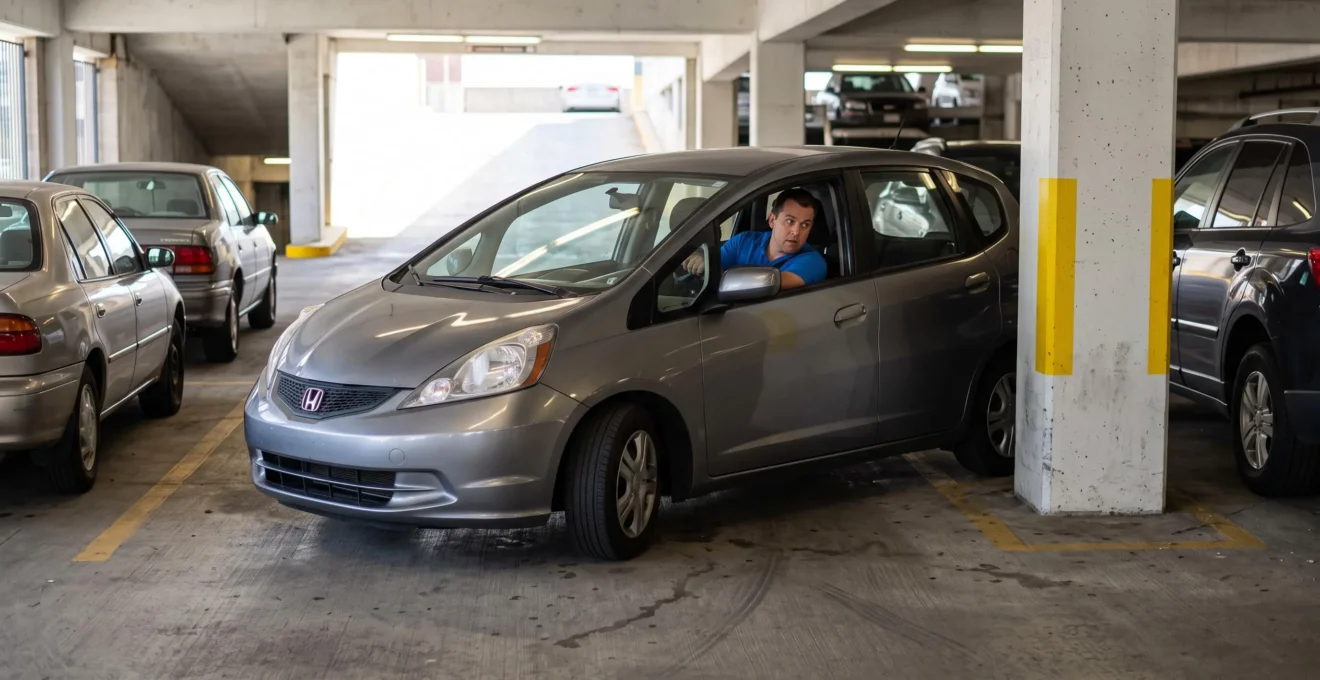
A compact rental car can be a practical choice for Miami and Orlando, particularly for solo travelers and couples who expect frequent urban stops, limited parking spaces and relatively little luggage. Its smaller exterior dimensions make navigating tight garages, narrow access lanes and busy parking areas easier than with many larger sedans or SUVs. However, vehicle size is only one part of the decision.
The right rental depends on the actual model supplied, the dimensions of the luggage, the number of passengers and the proportion of city versus highway driving. Miami presents particular challenges around dense commercial districts, beachside parking and hotel garages. Orlando offers extensive parking facilities around shopping districts and attractions, but longer journeys between destinations make comfort and luggage capacity important.
A compact is therefore most suitable when maneuverability matters more than cargo capacity. Before booking, travelers should compare the advertised vehicle category with their practical requirements, examine the rental agreement and account for tolls, insurance and additional fees. The objective is to choose a car that remains convenient throughout the Florida itinerary, rather than simply selecting the lowest advertised daily rate.
Compact Rental Cars: The Essential Points
- Compact cars simplify tight parking maneuvers in Miami, especially in constrained garages and parallel-parking spaces.
- Two suitcases may fit some compact models, but actual dimensions, trunk shape and the assigned vehicle determine luggage compatibility.
- For a Miami–Orlando trip, compare total rental costs, toll arrangements, highway comfort and air-conditioning performance before choosing a vehicle class.
- Why Are Compact Cars Easier to Maneuver in Crowded Parking Garages?
- How to Check Whether Two Suitcases Fit in a Compact Rental Car?
- Compact Sedan or Hatchback: Which Is Better for Frequent City Stops?
- What Should Compact Car Drivers Watch for During Florida Rainstorms?
- How to Make Multiple City Stops Easier With a Small Rental Car?
- Which Sedan Design Features Can Complicate Parking in Miami?
- How to Cool a Hot Rental Car Efficiently Before a Long Drive?
- How to Match a Florida Rental Car to Your Budget and Actual Needs?
Why Are Compact Cars Easier to Maneuver in Crowded Parking Garages?
Compact cars are generally easier to maneuver in crowded parking garages because their shorter bodies and narrower exterior dimensions require less space when positioning the vehicle. A shorter wheelbase can also help reduce the turning space needed, depending on the steering geometry of the particular model. These characteristics are useful in Miami, where some parking structures have restrictive ramps, pillars and individual parking bays.
For a practical reference, Federal Lands Highway technical drawings specify a perpendicular parking stall measuring 9 feet wide and 18.5 feet long. These dimensions provide a useful comparison when checking whether a rental vehicle can fit within a designated space. They are technical design specifications, however, not a survey of existing Miami or Orlando garages. Actual dimensions, aisle widths and clearances vary by property.
The difference between the two cities is also relevant. Some older Miami Beach hotel garages may have constrained entrances, tight turning areas or limited clearance. Modern Orlando parking facilities, particularly around major attractions, often provide more extensive parking layouts. Nevertheless, a large facility does not guarantee that every individual space or access ramp is suitable for every vehicle.
Before booking, compare the exact vehicle’s length and width with the available parking information. Do not rely exclusively on the word compact: rental categories vary between companies, and the model shown may be replaced by a similar vehicle.
Driving position matters as well. Some compact hatchbacks provide relatively upright seating and good visibility around the rear corners. This can help when reversing between concrete pillars, although mirrors and parking cameras remain essential.
9 ft × 18.5 ft
A perpendicular parking-stall dimension specified in the referenced federal technical drawing. It is a comparison reference, not a guarantee of the dimensions available at a particular Florida garage.
Federal Lands Highway, official parking-layout specifications, June 2024.
There is an important compromise: selecting a compact for easier parking can mean accepting less luggage capacity. Travelers should verify that the available trunk space accommodates their bags before prioritizing maneuverability.
Ultimately, a compact is particularly useful when parking conditions are uncertain, but checking the specific garage remains more reliable than assuming every compact will fit comfortably everywhere.
How to Check Whether Two Suitcases Fit in a Compact Rental Car?
Two suitcases can fit in some compact rental cars, but the result depends on their dimensions, the shape of the trunk opening and the specific model supplied. A rental category’s advertised baggage capacity is a useful starting point, not a universal guarantee. Travelers should measure their luggage and compare it with the actual vehicle’s cargo specifications before booking.
Consider Enterprise‘s published U.S. compact category: it identifies a Nissan Versa or similar vehicle, with seating for five and an advertised capacity of two bags. The qualification matters because the assigned vehicle may differ from the representative model. Moreover, the stated bag capacity does not establish that two large hard-shell suitcases will fit.
Measure each suitcase at its widest, highest and deepest points, including wheels and handles. Then compare those measurements with the trunk’s usable width, height, depth and opening dimensions, where available. Total volume alone can be misleading: two bags may have sufficient combined volume on paper but remain impossible to position through a narrow trunk opening.
Sedans and hatchbacks also differ in cargo configuration. A compact sedan usually has an enclosed trunk separated from the passenger compartment. A hatchback offers a larger opening and potentially more flexible cargo arrangements, but luggage stacked high can obstruct the driver’s rear visibility.
Soft duffel bags offer more flexibility than rigid suitcases because they can adapt to irregular spaces. Hard-shell cases protect their contents but are less forgiving when the trunk has a narrow opening or awkward wheel-arch intrusions.
Passenger capacity introduces another constraint. Folding the rear seats may provide additional loading flexibility, but it removes seating capacity and is not possible in every configuration. A couple with two large suitcases may have a different set of options from three passengers carrying several smaller bags.
| Travel configuration | Potential compact-car suitability | What to verify |
|---|---|---|
| One passenger, two medium suitcases | Often practical | Trunk opening and usable dimensions |
| Two passengers, two large hard-shell cases | Model-dependent | Actual case measurements and trunk layout |
| Two passengers, soft duffel bags | Potentially more flexible | Loading arrangement and visibility |
| Three passengers, multiple suitcases | More restrictive | Seating capacity and cargo separation |
If the vehicle supplied cannot accommodate the luggage safely, an upgrade may be necessary. Do not assume that a roof rack or roof box will be available on a compact rental. Ask about the cost and availability of a larger class before accepting a last-minute change at the counter.
A compact remains a sensible option for light packers, but travelers with bulky cases should prioritize verified cargo dimensions over the advertised number of bags.
Compact Sedan or Hatchback: Which Is Better for Frequent City Stops?
A compact hatchback is often more convenient for frequent city stops because its rear tailgate provides a wider cargo opening and makes loading and unloading easier. A compact sedan can be preferable when luggage needs to remain concealed in an enclosed trunk. The better choice depends on whether the trip involves repeated access to bags or leaving belongings inside the vehicle between destinations.
For a Miami itinerary involving several restaurants, shopping areas and beachside destinations, a hatchback can make handling groceries, backpacks and smaller travel items straightforward. Its rear opening generally allows larger objects to be loaded without navigating a conventional sedan’s narrower trunk aperture.
However, the hatchback configuration introduces a security consideration. If the cargo area is visible through the rear window, bags left inside may be easier to see. A luggage cover can reduce visibility in some models, but travelers should not assume one will be supplied.
A sedan’s separate trunk offers a useful advantage: when properly closed, luggage is less visible from outside. This can be convenient when moving between hotels, garages and tourist destinations. It does not make the car theft-proof, and valuable items should never be left unattended in either body style.
Parking visibility is another consideration. Some hatchbacks have relatively upright rear windows and a compact rear profile, making the vehicle’s dimensions easier to judge when reversing. Yet visibility depends on window shape, rear pillars, headrests and camera positioning rather than body style alone.
| Practical criterion | Compact sedan | Compact hatchback |
|---|---|---|
| Loading access | Narrower trunk opening | Large rear tailgate opening |
| Concealing luggage | Separate enclosed trunk | May require a cargo cover |
| Frequent unloading | Can be less convenient | Generally easier |
| Rear visibility | Depends on rear-window design | Can offer a more upright view |
| Parking footprint | Model-dependent | Model-dependent |
The number of daily stops can help determine the most suitable configuration. Travelers who repeatedly retrieve shopping bags or equipment may appreciate a hatchback. Those who transport luggage between hotels and prefer a separate storage compartment may find a sedan more convenient.
In both cases, avoid displaying electronics, handbags, passports or other valuables. An enclosed trunk is a storage advantage, not a substitute for sensible security precautions.
For most couples making frequent urban stops, either configuration can work well. The decisive factor is how often the cargo area needs to be accessed and whether belongings remain in the car.
What Should Compact Car Drivers Watch for During Florida Rainstorms?
Compact car drivers should treat heavy Florida rain as a visibility and traction challenge, not as a minor inconvenience. Standing water can separate tires from the road surface, causing hydroplaning, while heavy rainfall reduces visibility and increases stopping distances. The correct response is to slow down smoothly, increase following distance and avoid sudden steering or braking inputs.
Florida’s wet-road driving guidance applies to every vehicle class. The Florida Department of Highway Safety and Motor Vehicles explains that hydroplaning occurs when a layer of water prevents normal tire contact with the road. Speed, insufficient tire pressure and worn tread can increase the risk.
Compact vehicles are not automatically more vulnerable to hydroplaning simply because they are smaller or lighter. Tire condition, tire pressure, tread depth, vehicle speed, water depth and road conditions are more useful factors to evaluate than the rental category alone.
When steering begins to feel unusually light or the vehicle appears to lose normal road contact, ease off the accelerator and avoid abrupt braking or steering movements. Allow the tires to regain contact progressively. Do not attempt to maintain normal highway speed through standing water.
Drivers should also be cautious around low-lying roads, underpasses and areas where water accumulates. Never drive through a flooded roadway to test its depth. Turn around and find an alternative route.
Before departure, inspect the windshield wipers and exterior lights. The Florida driver handbook also advises using headlights when windshield wipers are operating. In heavy rain, functioning wipers, clean windows and appropriate lighting are essential for seeing other vehicles and being seen.
Rental-car condition documentation matters too. Photograph existing damage and note any visible problems before leaving the pickup location. If water-related damage occurs, contact the rental company promptly and follow its reporting procedure. Insurance coverage and credit-card rental protection depend on the applicable terms and exclusions; neither should be assumed to cover every weather-related incident.
For a longer Miami–Orlando drive, check weather conditions before departure and allow flexibility when storms affect visibility or road conditions. A route that is convenient in dry weather may become unsuitable during severe rainfall.
Rain safety ultimately depends more on speed, tire condition and driver decisions than on vehicle size. A compact can be perfectly suitable for Florida driving when operated within the conditions and its capabilities.
How to Make Multiple City Stops Easier With a Small Rental Car?
A small rental car makes multiple city stops easier by reducing the space required for parking, simplifying low-speed maneuvers and making it easier to enter or leave constrained parking spaces. However, the benefits are greatest when drivers organize their stops in advance, prepare electronic toll arrangements and choose parking according to each destination rather than searching randomly upon arrival.
Start by organizing destinations according to parking difficulty. A location with limited parallel parking or narrow access roads may deserve an earlier visit, when the driver is fresh and has more time to maneuver. Locations with large parking garages can be scheduled later if their access is simpler.
For Miami, compare street parking, garages and valet facilities. Street parking may involve more searching and restrictions. Garages offer a defined parking area but can have clearance limitations and different payment arrangements. Valet parking reduces the need to maneuver independently, although the service introduces its own cost and vehicle-handling considerations.
Downtown Orlando presents a different pattern. Large parking facilities may make access straightforward, but walking distance, exit queues and the location of the parking entrance still affect the overall convenience of a stop.
A useful decision process evaluates three factors before choosing a space:
- Cost: Compare the displayed parking rate and any applicable service charges.
- Walking distance: Consider how far the parking location is from the actual destination.
- Exit convenience: Check access restrictions, payment arrangements and likely maneuvering difficulty.
Electronic toll arrangements should also be prepared before driving. Florida’s SunPass information for rental vehicles explains that toll usage may be processed through prepaid accounts or rental-company programs. License-plate recognition can connect toll activity with a rental agreement, and additional service fees may apply depending on the rental company’s program.
Travelers should review the rental agreement to understand the toll program, applicable charges and available alternatives. A prepaid account may be associated with a rental vehicle by adding its registration plate and the rental dates, subject to the relevant account conditions. The correct procedure depends on the chosen payment arrangement.
Phone mounts, navigation settings and parking applications should be configured while stationary before the first stop. Avoid handling a phone or attempting to resolve payment issues while driving.
These small preparations become increasingly useful during a day with several destinations. A compact’s maneuverability helps with individual parking decisions, while good planning reduces the time and attention spent repeating the same tasks.
The real advantage of a compact across a multi-stop itinerary comes from combining its manageable dimensions with a predictable parking and navigation routine.
Which Sedan Design Features Can Complicate Parking in Miami?
Several sedan design features can make parking in Miami more difficult, even when the vehicle belongs to a relatively manageable rental category. Long rear overhangs, low front bumpers, thick rear pillars and wide-opening doors can complicate parking in tight garages or narrow parallel spaces. Understanding these characteristics before leaving the rental counter can help prevent avoidable scrapes and maneuvering problems.
A sedan’s total length does not tell the entire story. The rear overhang determines how far the back of the vehicle extends beyond the rear axle. A long overhang can make positioning more demanding when reversing into a short parking space, particularly when concrete pillars or vehicles are close behind.
Low front splitters and bumper extensions present a different problem. Some sedans have low front bodywork that can scrape when approaching steep garage ramps, raised entrances or abrupt changes in road level. Drivers should approach unfamiliar ramps slowly and avoid assuming that a vehicle with a relatively short body automatically has generous ground clearance.
Thick rear pillars can restrict the driver’s view when reversing. This is particularly relevant in Miami’s busy beachside areas, where pedestrians, cyclists and other vehicles may move through narrow access lanes. Backup cameras help identify obstacles directly behind the vehicle, but they do not replace checking mirrors and blind spots.
Door width is another overlooked consideration. A sedan with long doors can be difficult to enter or exit when parked between two vehicles in a narrow space. This matters when traveling with luggage or when passengers need additional room to get in and out.
International travelers should also check the exact rental category. In U.S. fleets, intermediate, midsize and full-size labels do not necessarily correspond to the vehicle dimensions expected in other markets. The actual model and its measurements are more useful than the category name.
Before accepting the vehicle, inspect its bumpers and lower bodywork, check the camera and mirrors, and familiarize yourself with the vehicle’s exterior dimensions. Photograph any existing marks and ensure they are recorded according to the rental company’s procedures.
Damage prevention is a financial consideration as well as a driving concern. Scraping a low bumper against a ramp or curb may lead to a damage assessment at return, depending on the rental agreement and the circumstances.
A compact sedan may still be an excellent choice, but its precise shape and ground clearance deserve attention when the itinerary includes older garages and narrow Miami parking spaces.
Key Takeaways Before Choosing the Final Rental
- Vehicle dimensions and luggage compatibility should be verified together rather than evaluated as separate booking decisions.
- Florida driving conditions require attention to tire condition, wet-road behavior, visibility and reliable air conditioning.
- The total rental cost should reflect toll arrangements, insurance choices, fuel policy and the requirements of the complete Miami–Orlando itinerary.
How to Cool a Hot Rental Car Efficiently Before a Long Drive?
The most efficient way to cool a rental car parked in the Florida sun is to remove trapped hot air before relying on the air-conditioning system. Opening the doors briefly allows the hottest cabin air to escape. Once the engine and air conditioning are running, the ventilation settings can help bring the interior toward a comfortable temperature without continuously drawing in hot outside air.
A parked car can become significantly hotter than the surrounding air, particularly when exposed to direct sunlight. This makes the first few minutes inside the vehicle uncomfortable and can place an unnecessary demand on the cooling system if the driver simply starts driving with the windows closed and the fan at maximum speed.
Use a simple sequence when the vehicle is parked in a safe location:
- Open the doors briefly to allow accumulated hot air to escape.
- Start the vehicle according to the manufacturer’s instructions and switch on the air conditioning.
- Use the fan and ventilation settings to move hot cabin air out during the initial cooling period, where the vehicle’s controls allow it.
- Close the windows once the cabin temperature begins to improve.
- Activate recirculation when appropriate to reduce the amount of hot outside air entering the cabin.
Recirculation is particularly useful in Florida’s hot weather. In fresh-air mode, the system continuously brings outside air into the cabin. Once the initial hot air has been removed and the interior begins cooling, recirculation allows the air-conditioning system to work with air already inside the vehicle.
However, recirculation should not be treated as a permanent setting for every condition. Follow the vehicle’s instructions and switch to fresh air when needed, particularly if the windows begin fogging or cabin air quality becomes uncomfortable.
Parking habits also influence how much cooling is required. A windshield sunshade can limit direct sunlight entering through the front glass. When possible, choose shaded parking and consider the afternoon sun’s direction when positioning the vehicle.
Before accepting the rental, check that the air conditioning produces consistently cool air and that the ventilation controls work. Some compact vehicles have limited rear-seat airflow, which can affect passenger comfort during longer journeys. Confirm whether rear vents are available and working rather than assuming every model has them.
Never leave children or pets unattended in a parked vehicle, even for a short cooling period. Opening the windows or leaving the air conditioning running does not make an unattended vehicle a safe environment.
For a Miami–Orlando drive, pre-cooling the cabin before loading luggage and starting the journey can improve comfort. It is also worth checking that the vehicle’s cooling system performs properly before leaving the pickup location.
A well-functioning cooling system is particularly important for Florida travel. Efficient ventilation improves comfort, but mechanical performance and passenger safety should always take priority over attempts to reduce cooling time.
How to Match a Florida Rental Car to Your Budget and Actual Needs?
The best way to match a Florida rental car to a budget is to start with the actual travel requirements and compare the complete rental cost rather than the advertised daily rate. Passenger numbers, luggage dimensions, parking conditions, highway mileage, toll exposure and insurance arrangements all influence which category represents the best overall value. A compact can reduce unnecessary vehicle costs, but only if it meets the needs of the entire itinerary.
Begin with a practical needs assessment. A solo traveler carrying one suitcase and spending most of the trip in Miami may have little reason to rent a large SUV. A couple carrying several hard-shell cases, visiting multiple hotels and driving between Miami and Orlando may benefit from a larger trunk or more comfortable passenger space.
Next, compare the total rental cost. The advertised base rate is only one component. Depending on the booking and pickup arrangement, additional costs may include:
- Airport-related surcharges and applicable taxes.
- Insurance products or rental protection not already covered by an existing policy.
- Fuel arrangements, including return-full and prepaid options.
- Electronic toll charges and rental-company service fees.
- Additional-driver charges, optional equipment and other contractual extras.
Insurance deserves particular attention. Travelers should understand the difference between rental-company coverage, personal auto insurance and any protection provided by an eligible credit card. Coverage limits, exclusions, eligible vehicle types, payment requirements and documentation conditions can differ. Check the actual policy rather than assuming that existing protection applies automatically.
Tolls also affect the comparison. SunPass explains that rental vehicles can use different toll-payment arrangements, including rental-company programs and prepaid account options. Additional service fees may apply, depending on the provider and agreement. Review the rental company’s current terms before selecting an option.
Enterprise’s published U.S. category information provides a useful example of why category comparisons matter. Its compact listing identifies a Nissan Versa or similar vehicle with an advertised capacity of two bags. Its standard Volkswagen Jetta or similar category and midsize Toyota Corolla or similar category list three bags. These are the company’s published category specifications, not guarantees about the exact vehicle supplied or universal capacities across rental companies.
The price difference between categories should therefore be considered alongside the potential cost of discovering that the smaller vehicle cannot accommodate the luggage. A planned upgrade may be more predictable than accepting an unconfirmed counter upgrade, particularly at a busy airport.
Five Checks Before Confirming a Florida Rental
- Count all passengers and list the number and type of bags. Deliverable: a written passenger-and-luggage inventory.
- Measure the largest suitcase and compare it with the selected vehicle’s available cargo specifications. Deliverable: a luggage-dimension comparison.
- Check the vehicle’s exterior length, width and relevant parking-clearance requirements. Deliverable: a vehicle-dimension record.
- Calculate the expected rental total, including taxes, insurance decisions, fuel arrangements and toll-program fees. Deliverable: a complete cost comparison.
- Review the vehicle’s suitability for both Miami urban driving and the longer Orlando highway journey, including air conditioning, comfort and cruise control where available. Deliverable: a final vehicle-selection checklist.
Finally, consider how much of the itinerary involves city driving compared with highway travel. A compact is attractive for frequent Miami parking and short urban journeys, but a comfortable driving position, stable highway behavior, sufficient cargo space and reliable air conditioning are also important for longer distances.
For solo travelers and couples with modest luggage requirements, a compact rental can provide an effective balance of convenience, maneuverability and cost. The strongest choice is the least expensive vehicle that meets every essential requirement without creating avoidable compromises during the Florida trip.
Is a compact rental car large enough for a Miami–Orlando road trip?
Yes. A compact rental car can be suitable for a Miami–Orlando journey when it has enough passenger and luggage space and its mechanical condition is satisfactory. Check the air conditioning, driving comfort, cruise control availability and tire condition before departure. The suitability of the vehicle depends on the number of travelers, luggage and individual comfort requirements.
Is parking a compact car easier in Miami Beach than parking an SUV?
Generally, a compact car’s shorter length and narrower body can make tight parking maneuvers easier than with a larger SUV. However, the actual advantage depends on the vehicle dimensions, turning characteristics and available parking space. Garage ramp geometry, clearance and aisle width should also be checked where possible.
Can two adults travel comfortably with two suitcases in a compact rental?
It depends on the assigned model and suitcase dimensions. Some U.S. compact rental categories advertise capacity for two bags, but that does not guarantee that two large hard-shell cases will fit. Measure the suitcases and compare them with the actual trunk dimensions before booking. A larger category may be more appropriate for bulky luggage.
Are compact cars suitable for Orlando theme-park visits?
Yes. Compact cars can be convenient for Orlando theme-park trips, especially for solo travelers and couples with limited luggage. Their smaller dimensions can simplify everyday driving and parking. However, check the parking arrangements at each destination and consider the amount of luggage, shopping and passenger space required for the complete trip.
Should travelers choose a compact or midsize rental car in Florida?
A compact is generally appropriate when maneuverability, urban parking and rental cost are priorities. A midsize vehicle may be more suitable when travelers need additional luggage capacity, cabin space or comfort for longer journeys. Compare the actual models and total prices rather than relying exclusively on rental-category labels.